
Buildings

( Jan Abrahams Beerstraten , De markt te Den Dosch)
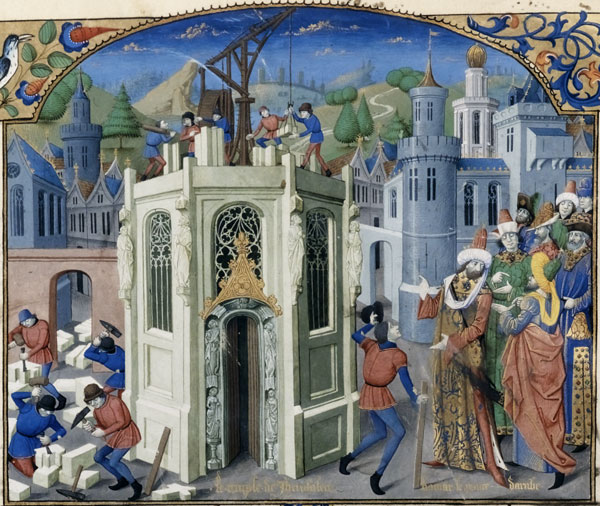
Cityscapes, some of the earliest forms of architectural art, became popular in Europe the 17 century. Earlier works date back to the medieval ages, though they usually only served as backgrounds for religious scenes and portraits.

( Jonas Zeuner: The Jan Roodenpoortstoren, Amsterdam)
During Holland's golden age (when iconic works like Vermeer'sThe Girl With The Pearl Earring were produced), the Northern Netherlands became increasingly involved in mercantilism, flourishing as a nation of traders. The subsequent urbanization led to a growth of traditionally established cities. The biggest- Amsterdam, is featured in many of these pieces, including the one above.

 (Along the River during the Qingming Festival, Zhang Zeduan)
The cityscape trend emerged in China in the 20th century. Prior to that, art tended to surround the natural world, but there were excpetions. The above is a painting from 1085-1145, is an extremely detailed depiction of daily live for ancient art.

The Edo period (1603-1868) brought the first waves of urbanization to Japan. Though the industrial revolution happen only during the Meiji period (1868-1912), many cityscapes were created during the Edo period. Above is Utagawa Hiroshege's Night View of Sarukwakacho.

(Marc Chagall: Paris through the window, 1913)
Cityscapes during the rise of avant-garde in the early 20th century were often bizzare, and more focused on the artist's interpretation of the city and the emotions it evoked rather than making it look like the city itself.Fernand Léger's "The City" is an example of a cubist's interpretiation of the city:
 Considering this history, from all these works we can notice the importance of perspective

To demonstrate, I will use my own sketch:
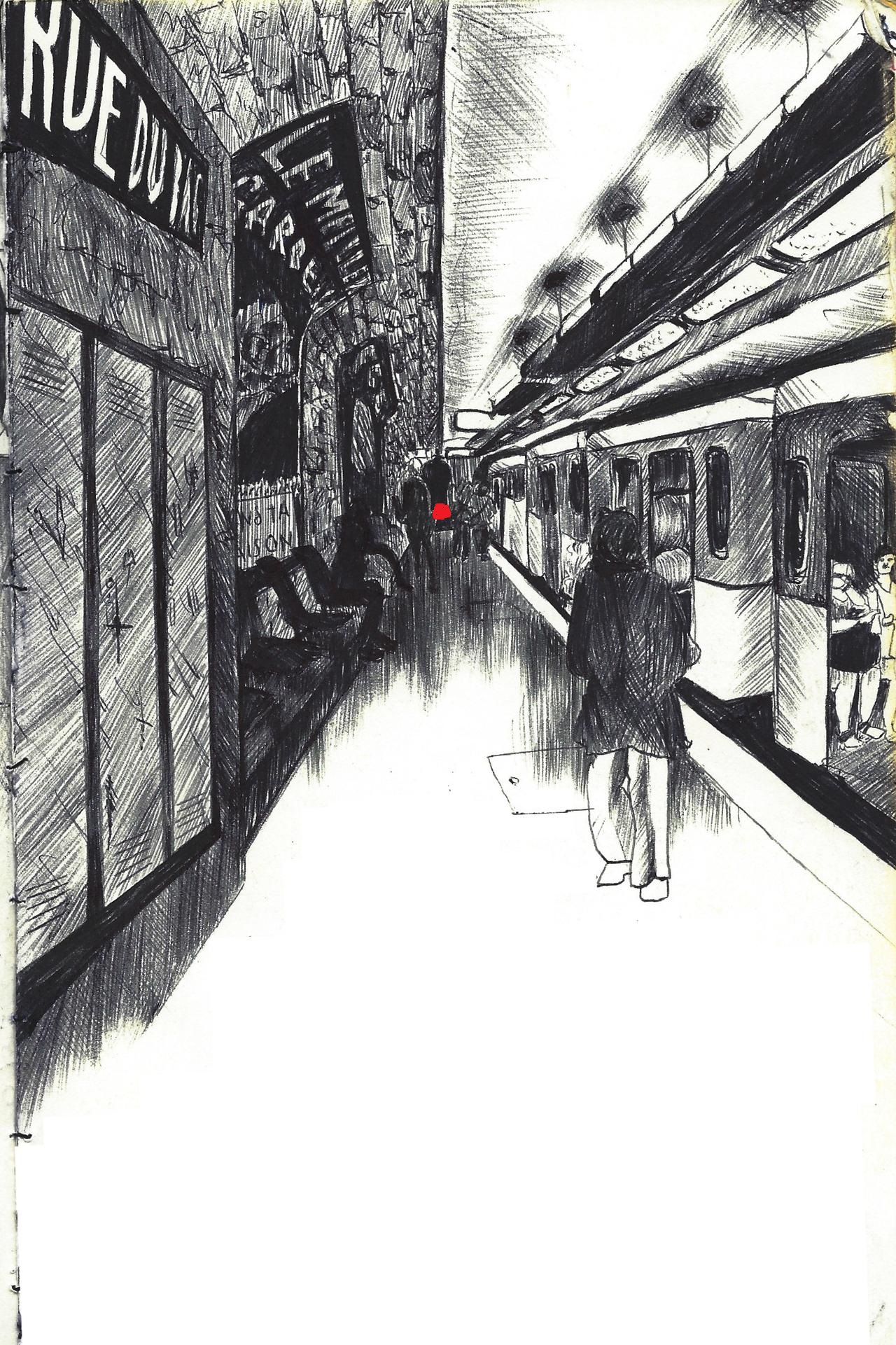
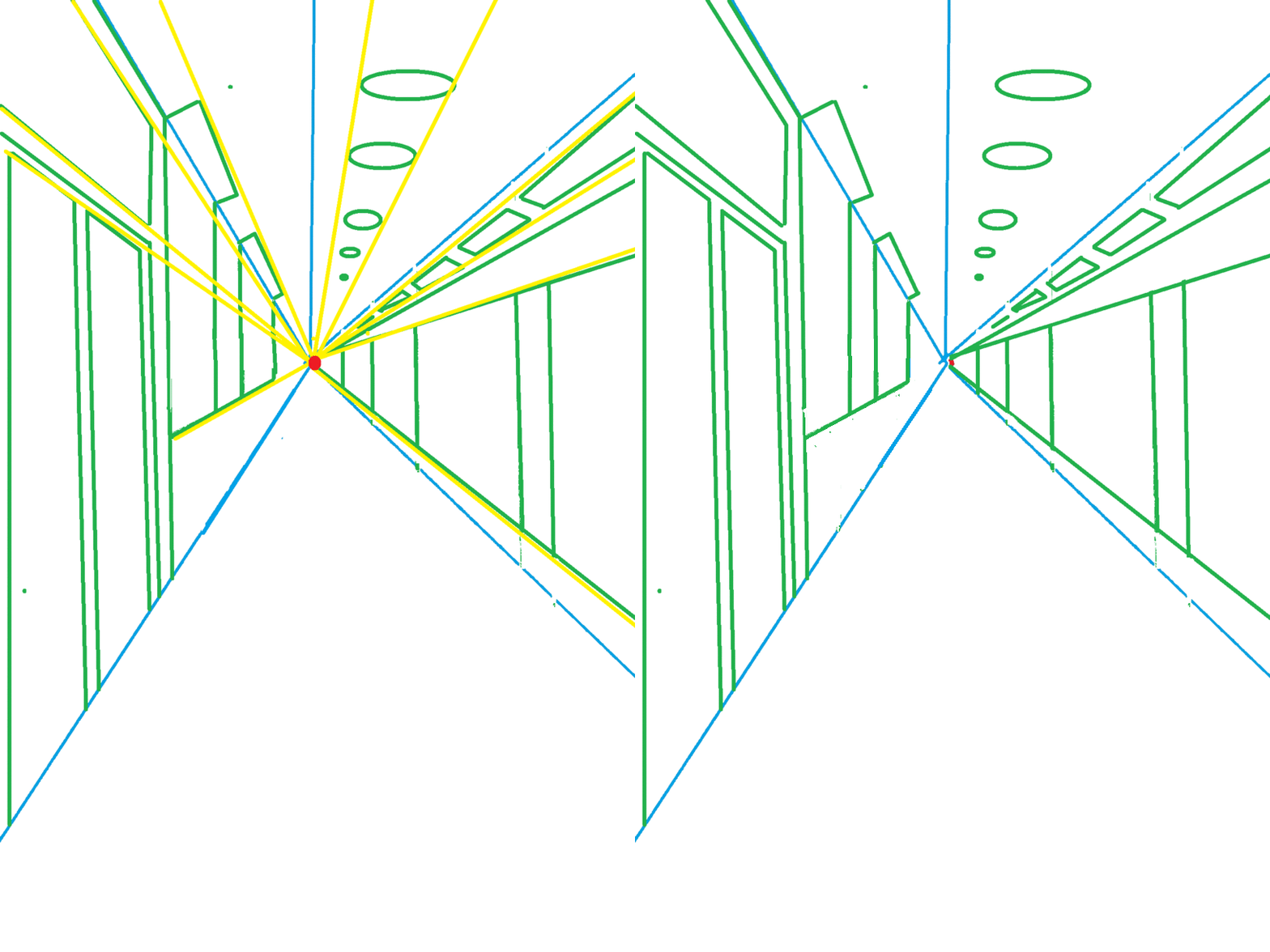
I've added a dot where the lines meet, or the vanishing point. I like to start with this because it helps me think about where I want the focus of the image to be. The human eye tends to track any lines, and if all lines lead to an object, that object will be the center of attention. I like to build around this focal point.
Sometimes, there is more than 1 point of perspective, but if you learn 1 point perspective you can apply that knowledge to many different points of perspective.
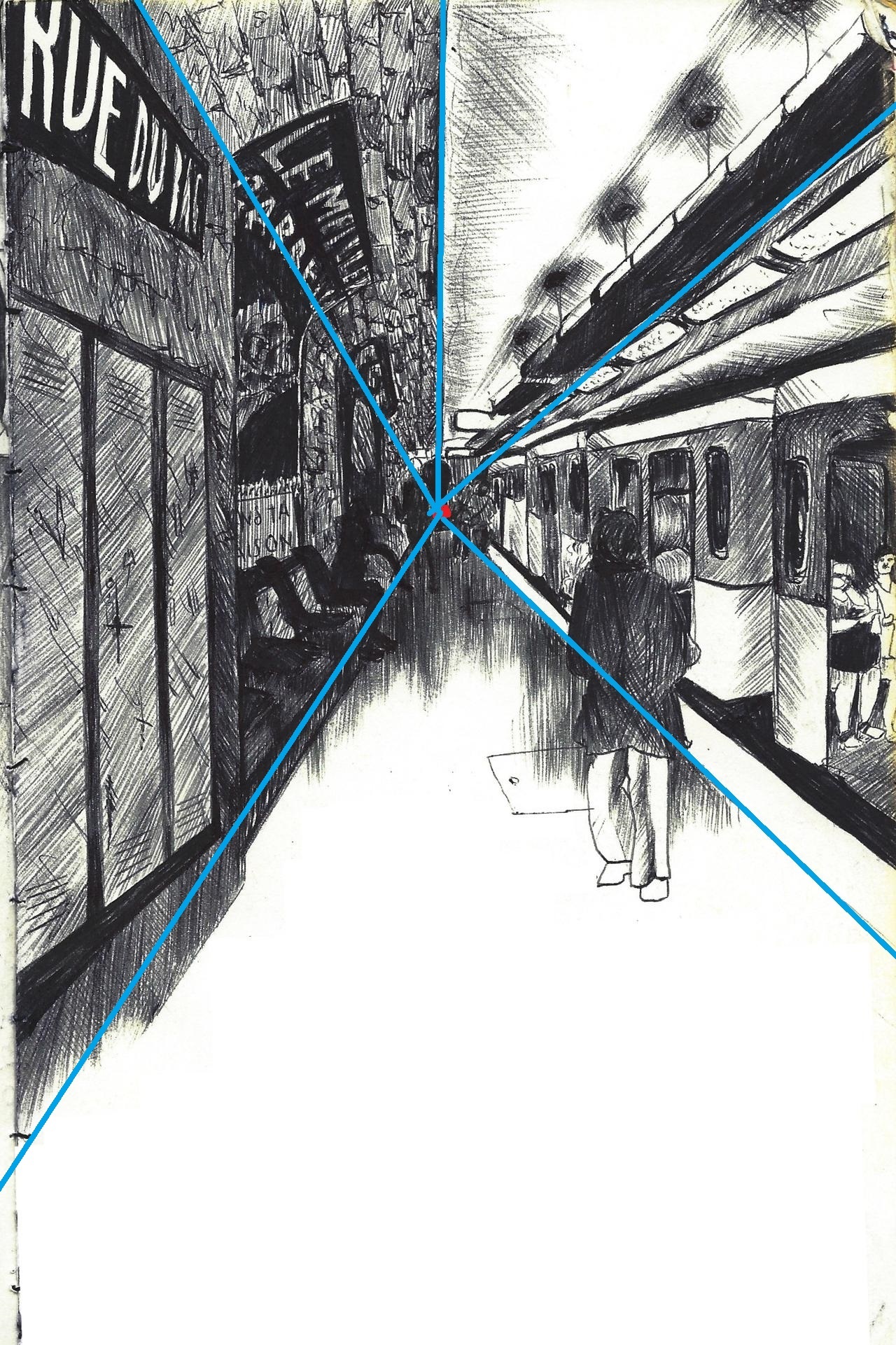
This piece is old, and you can see my perspective is off, especially if you look at the gap between the locker and the bottom left line. All these lines should be tangential to the items you place in your cityscape.
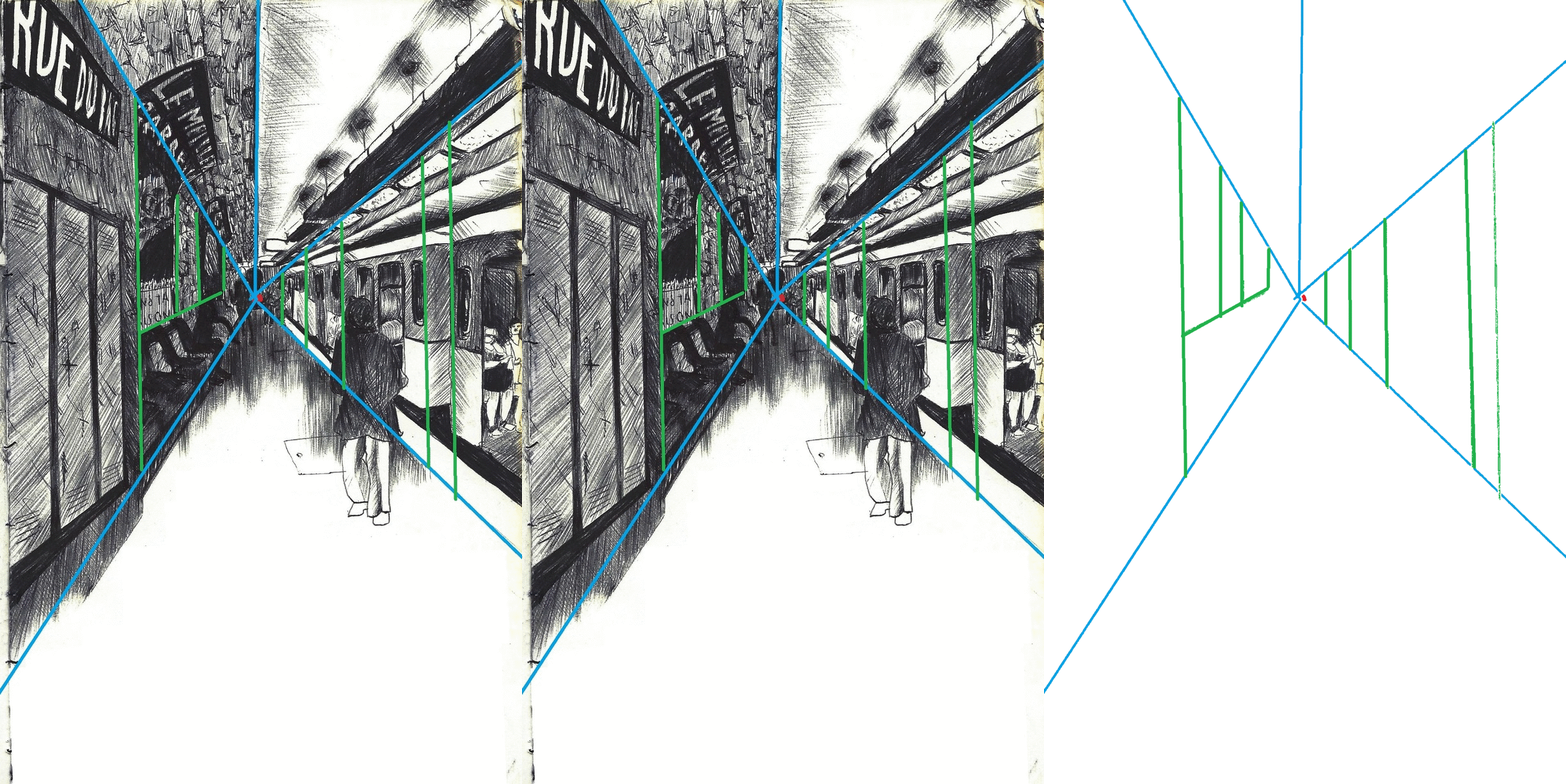
We divide sections for the main characters of our image, relying on the lines we've just drawn.
we can already see the outlines of our emerging city :-)
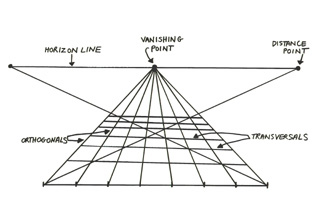
As you add more detail, remember that things that are closer are larger and things that are further away are smaller. Also, when drawing objects consider their respective transversals and orthogonals. I've marked mine on the following gif.
At this point, all that's left is to add the details of the items in your cityscape!